

How Physical Therapy Can Help Older Adults Stay Strong, Safe and Independent
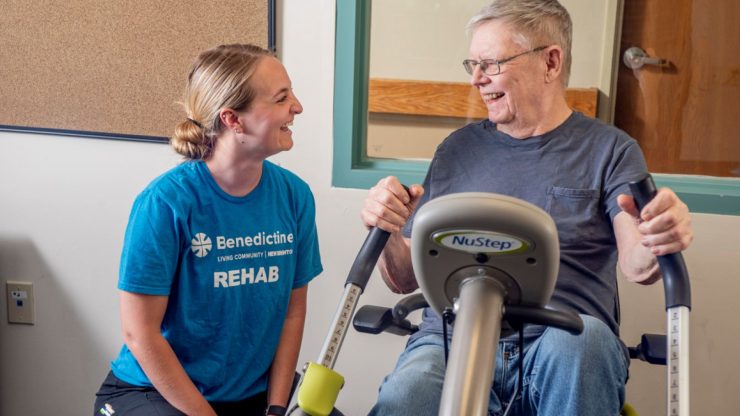
Moving our bodies can become challenging as we age. However, needing more support with strength, agility and flexibility doesn’t have to mean giving up independence. Physical therapy can help older adults maintain their overall mobility, even after an illness or injury, and feel more confident engaging in everyday activities.
Physical therapy isn’t just for recovering from an injury—it’s about staying strong, confident, and active at every stage of life!
At Benedictine, our therapy team works with you to develop a personalized plan that supports your goals, whether you’re preparing for an upcoming surgery, preventing injuries, improving strength and mobility, or reducing your risk and fear of falling.
No matter your age or current abilities, there are opportunities to build strength, improve confidence, and maintain the independence you need to enjoy the activities and lifestyle you love.
Don’t wait for an injury to take the first step toward better mobility and wellness!
Here are a few ways physical therapy can allow seniors to thrive:
Promote Mobility
For older adults, mobility is key for promoting independence and engagement. A physical therapist can help them maintain and improve their mobility through:
- Stretching: Gentle stretching exercises can help ease stiffness, support joint flexibility and make everyday movements more comfortable.
- Gait training: Gait training supports older adults as they practice standing, walking and balancing. It can include supported single-leg stands or heel-to-toe walking. With guidance, these activities can help the nervous system respond to changes in surfaces and surroundings, which can help prevent falls.
- Pain management: Physical therapy can help older adults manage chronic pain conditions, particularly joint or back pain, through personalized strategies that do not rely solely on medication.
Research from the National Institutes of Health has found that strength and physical activity interventions can support mobility in older adults.
Rebuild Strength After an Illness or Injury
After surgery, hospitalization, illness or a fall, physical therapy can help seniors achieve practical goals, such as standing from a chair, walking safely or climbing stairs.
Many Benedictine Living Communities offer rehabilitation services tailored to individual needs. Our professional physical therapists can help older adults regain independence and manage daily activities with more ease.
Reduce the Risk of Falls
Physical therapy can support fall prevention by strengthening the lower body, improving balance and coordination and promoting safer walking patterns. A few exercises and supported movements that can help with fall prevention include:
- Single-leg stands: Involves standing on one foot for 10 to 15 seconds, with support nearby as needed. Single-leg stands can also help strengthen and stabilize ankle and hip muscles.
- Heel-to-toe walking: Involves walking 10 to 20 steps forward by placing the heel of one foot directly in front of the other. With appropriate guidance and support, it can help older adults practice balance and controlled movement.
- Marching-in-place exercises: Involves slowly lifting the knees while standing in one spot to practice natural stepping movements.
- Sit-to-stand exercises: Involves standing up from a chair without using the hands to promote leg and core strength.
- Side-leg-raise exercises: Involves slowly lifting one leg while keeping the body straight. These exercises may help strengthen the outer hips.
- Holding support: Involves using a nearby support in the home or elsewhere, such as a wall, kitchen counter or sturdy chair. These can be helpful for practicing fall-prevention exercises.
The right activities depend on a person’s health, balance and mobility. A physical therapist can recommend an appropriate plan, demonstrate safe technique and identify changes that can make movement safer at home. Older adults should speak with a healthcare professional before beginning a new exercise routine.
Our physical therapists at Benedictine can help develop targeted training using these exercises and others, according to each person’s goals, abilities and safety needs. To learn more, find a Benedictine community near you and schedule a tour. Many of our communities also have skilled nursing care, which can help support recovery and well-being.
Support Confidence and Quality of Life
Changes in mobility can affect more than physical routines. When familiar tasks become more difficult, an older adult may feel less confident moving through the day. That uncertainty can make it harder to stay active, connected and engaged in activities that bring meaning and purpose.
We are Here to Help Older Adults Thrive
Physical therapy can help rebuild confidence through safe practice of everyday skills. A personalized plan can emphasize challenge areas and give older adults the skills to safely and effectively navigate their environment. At Benedictine, care teams honor each person’s preferences, dignity and goals so they can live fully and live well.
Connect with a community near you by contacting us. We look forward to speaking with you and understanding your needs. We’re also happy to tell you about the other care services Benedictine has to offer.